Relief from Corns and Calluses
Thickened skin on your feet can be painful, but with the right care, corns and calluses can be controlled.
Understanding Corns and Calluses
Learn what causes these common skin growths and how our podiatrists can help.
Corns and Calluses Treatment and Care
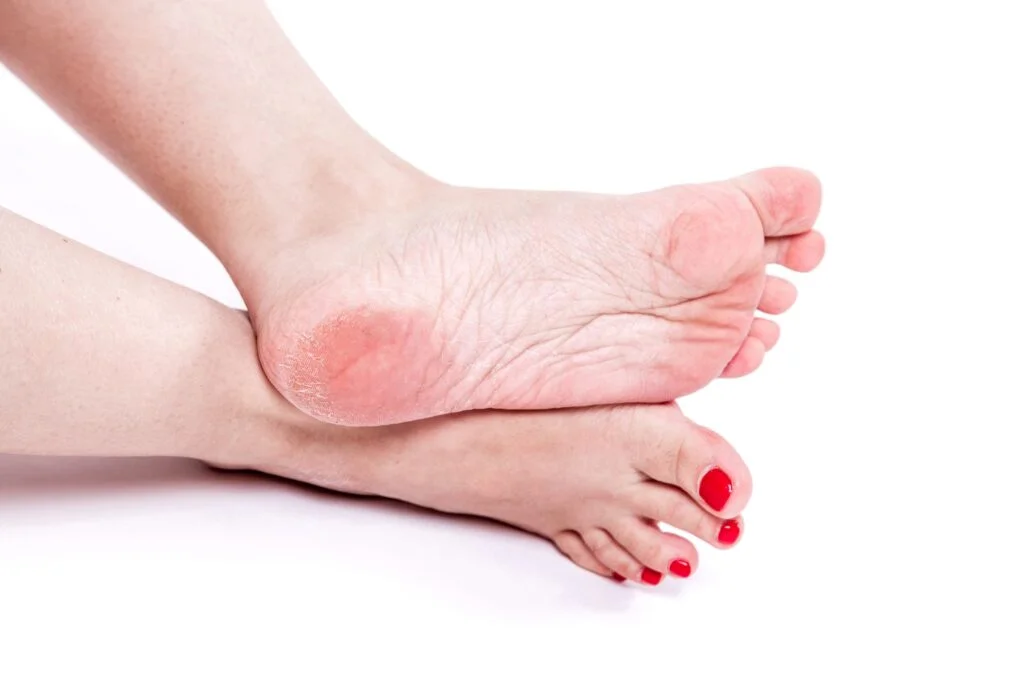
Calluses and corns are skin problems often found on the feet. A callus is a thick, hardened skin on the bottom of the foot that protects the skin from too much friction. They are often found on the ball of the foot, the heel, and under the big toe. Corns and calluses are your body’s response to friction or pressure against the skin. If your foot rubs inside your shoe, the affected area of skin thickens. If a bone is not in the normal position, skin caught between bone and shoe or bone and ground builds up.
A corn forms when two toes rub together, causing thicker skin with inflamed tissue underneath. Corns between the toes have soft cores, while those on the top of a toe are hard corns. Corns often form on top of buckled toe joints (hammer toes), and if your toes curl under, corns may grow on the tips of the toes.
Calluses spread on the bottom of the foot or on the outer edge of a toe or the heel. A callus will show hardened, thickened skin and may appear as a bump. The skin can be dry, flaky, or scaly. Walking on a callus can be painful as it grows larger. A pinch callus may grow along the outer edge of the heel or the big toe.
Both growths are caused by excess pressure and friction and can result from overuse, an abnormal gait, or shoes that are either too tight or too loose. In many cases, corns and calluses look bad but are not harmful. However, more severe ones may become infected or affect foot movement. If yours are painful or worsening, schedule an evaluation so we can determine the cause and outline the right treatment.
Treatment, Prevention, and Home Care
If your corns or calluses are mild, reducing friction may help. Different shoes, moleskin patches, or soft pads may be all the treatment you need. If you have corns, wearing shoes with more toe room helps keep buckled joints from being pinched against the top of the shoe. For calluses, a cushioned insole, arch support, or heel counter can reduce friction.
Professional podiatric treatment can ease symptoms and eliminate the skin growth. We will shave the surface of a callus to relieve pressure. An exfoliant such as a cream with urea can remove dead skin, and an oral antibiotic can clear up any sign of infection. For a painful corn, medication may be injected beneath the built-up tissue. If we determine that your callus or corn is caused by your gait or foot structure, custom-fitted orthotics can greatly ease the friction and pressure.
If a bone or joint is out of place, certain parts of your foot may be under too much pressure. In such cases, surgery is often the best way to correct the problem. In most cases, surgery to improve bone position is an outpatient procedure, and your doctor may shave or cut away excess bone or release tendons to reduce tension on a joint.
Home treatment can be effective for corns and calluses that are not painful. Soak feet in warm, soapy water and rub the thickened areas with a pumice stone or foot file. Apply a moisturizing lotion every night and cover with a loose sock. With well-fitting shoes, consistent prevention, and professional care when needed, most patients keep these skin problems well under control.
Find Corn and Callus Care Near You
Our podiatrists treat corns and calluses at convenient locations near you.
Don’t let painful corns or calluses slow you down any longer.
We’re here to help you walk comfortably again. Book your visit today.